What Do Commercial Divers Do on Civil and Marine Projects?
Commercial divers work in places where important parts of a project or asset sit below the waterline and cannot be properly assessed from the surface. On civil and marine projects, that can mean inspecting bridge piles, checking submerged structures, investigating damage, supporting vessel recovery, or gathering information that engineers and asset owners need before deciding what work comes next.
The role is much broader than recreational diving. Commercial diving is work carried out underwater for a business, infrastructure, construction, inspection, maintenance, recovery, or other project purpose. The diver is part of a wider work team, with the task planned around the site, the underwater conditions, the equipment being used, and the information or outcome the client needs.
Send It Marine provides on-call diving services across South Australia for marine investigations, underwater inspections, flood-related assessments, infrastructure checks, and recovery works. This guide explains where commercial divers fit into civil and marine projects and what project managers should consider before engaging diving support.
What is commercial diving?
Commercial diving is underwater work carried out as part of a paid project rather than for recreation. Depending on the project, divers may inspect, measure, photograph, recover, position, clean, maintain, or assist with work on submerged assets and structures.
The exact capability varies between diving contractors. Some specialise in heavy underwater construction, welding, non-destructive testing, or ship maintenance. Others focus more on inspections, investigations, salvage, and marine project support. It is important to match the diving team to the actual scope rather than assume every commercial diver performs the same type of work.
For Send It Marine, the current diving scope is centred on marine investigations and recovery works, including underwater investigations, flood inspections, structural assessments, and marine recovery tasks across offshore and river-based locations in South Australia.
Why are commercial divers used on civil projects?
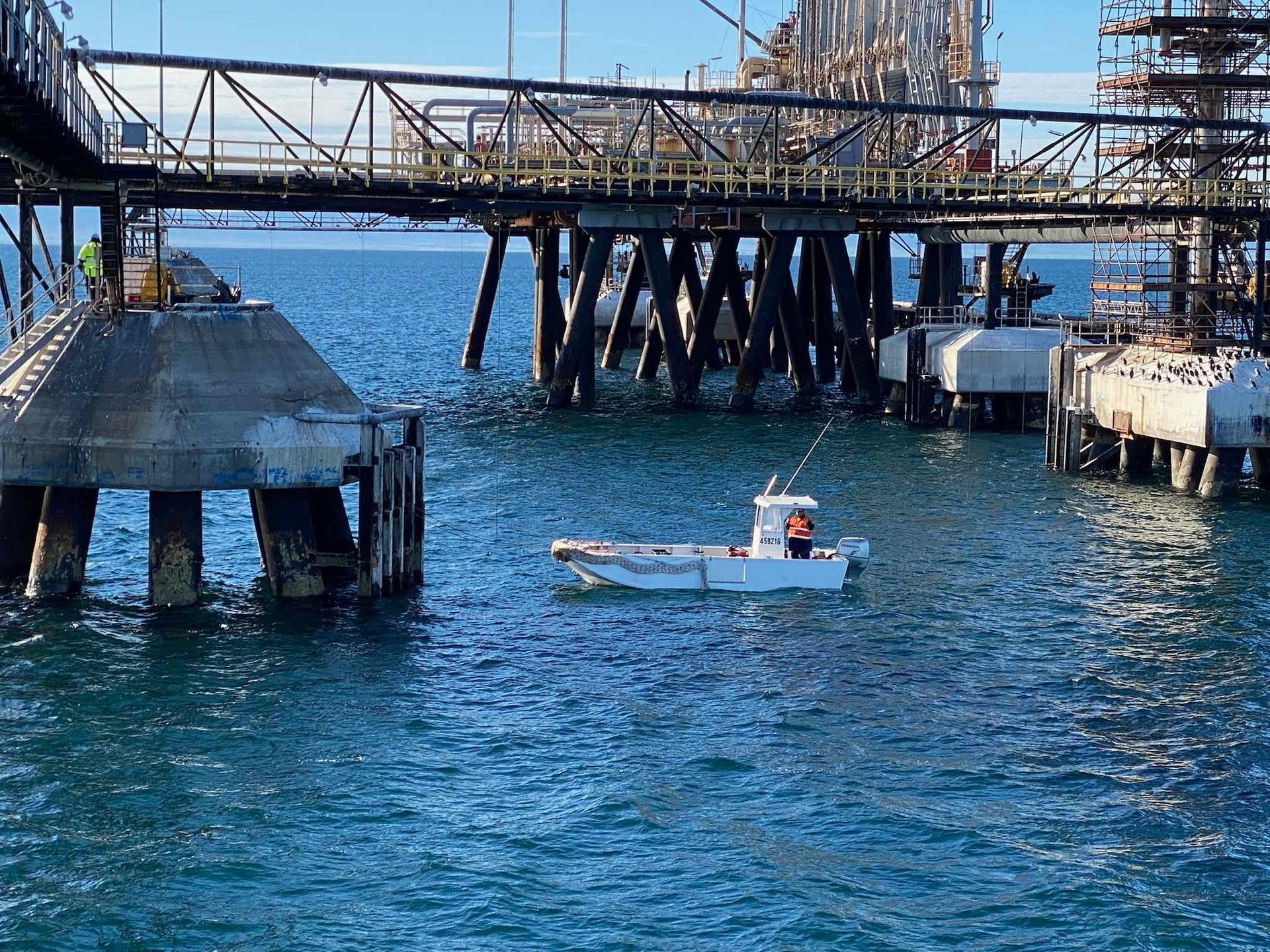
Civil infrastructure often extends below the waterline. Bridges, jetties, pontoons, culverts, retaining structures, moorings, pipelines, and other assets can contain submerged components that are difficult or impossible to inspect properly from land or from a vessel.
A commercial diver can physically access these areas and provide direct observations of the asset. Depending on the scope, this may include checking the condition of concrete, steel, piles, fittings, connections, scour zones, debris, or other underwater elements.
The resulting information can assist engineers, contractors, councils, and asset owners when deciding whether further investigation, maintenance, repair, recovery, or construction work is required. In this way, commercial diving is often an information-gathering step that helps reduce uncertainty before larger works begin.
What do commercial divers inspect underwater?
Underwater inspection is one of the most common uses of commercial diving on marine and civil projects. The objective is usually to document the condition of an asset and identify anything that needs closer engineering review or further action.
Depending on the project, divers may inspect:
- bridge piles, piers, abutments, and submerged foundations
- jetties, pontoons, wharves, and marina structures
- moorings, chains, anchors, and underwater fittings
- boat hulls and submerged vessel components
- culverts, pipes, outlets, and intake structures
- marine construction elements below the waterline
- submerged debris, objects, or damaged assets
Commercial diving companies commonly use underwater photography and video to record asset conditions for clients, engineers, and surveyors. Australian competitors in this space also use divers for bridge, wharf, mooring, pipeline, dam, and marine structure inspections, showing how broad the inspection role can be across infrastructure projects.
Send It Marine's dedicated marine infrastructure inspection services support underwater assessment of marine structures across South Australia.
How do divers support marine investigations?
Not every underwater job begins with a known problem. Sometimes the purpose of the dive is simply to understand what is happening below the surface.
A marine investigation might be required after an impact, flood event, vessel incident, unexpected movement, visible damage, or concern about an underwater asset. Divers can inspect the area directly and help establish the position, condition, and extent of what is below the waterline.
This can be particularly useful where surface observations are incomplete. A damaged vessel may look stable from above but have an obstruction or structural issue underneath. A bridge or jetty may show signs of impact at the waterline while the submerged section needs separate inspection. A flood event may move debris or expose sections of an asset that need closer assessment.
The information gathered during the dive can then be passed to the relevant project stakeholders for the next stage of assessment or planning.
What role do commercial divers play in boat and vessel recovery?
Marine recovery work is another area where divers can be important. When a vessel or object is partly or fully submerged, the recovery team may need information that cannot be gathered from the surface alone.
Divers can assist by inspecting the position and condition of the vessel, checking for obstructions or entanglement, identifying possible attachment or rigging points, and helping the wider recovery team understand how the asset is sitting on the riverbed or seabed.
For buoyancy-assisted recoveries, the underwater inspection can help determine where lifting or recovery equipment may be positioned. Divers may also support the placement of recovery systems where the project requires underwater access.
Send It Marine combines diving support with marine airbag recovery services, work boats, and other specialised marine equipment for suitable vessel and object recovery projects. Our earlier guide on how sunken boat recovery works explains how inspection, buoyancy, lifting, and stabilisation can fit together.
How can commercial divers support marine construction?
Commercial divers can support marine construction where parts of the work need to be checked, positioned, assessed, or accessed below the waterline. The exact task depends on the contractor's capability and the wider project scope.
Across the Australian commercial diving industry, divers may be used for activities such as underwater drilling, cutting, welding, concreting, installation, maintenance, and repair. Those are specialist trades and should not be assumed to form part of every diving contractor's offering.
For a business such as Send It Marine, the more relevant role is project support through underwater investigations, inspections, recovery capability, and access to marine vessels and equipment. This can complement marine construction project support where work boats, barges, inspections, or other marine services are required.
For project managers, this distinction matters. If the scope requires specialist underwater welding or construction trades, that capability should be confirmed directly. If the requirement is inspection, investigation, recovery, or marine access support, the diving scope may be different.
How are commercial diving projects planned safely?
Commercial diving work requires structured planning because the work environment introduces hazards that are not present in ordinary surface-based tasks. Water depth, current, visibility, temperature, vessel traffic, entanglement hazards, access, breathing equipment, communications, and emergency arrangements can all affect the dive plan.
Safe Work Australia guidance on diving work identifies construction, testing, maintenance, repair, inspection, and commercial recovery or salvage as activities that can fall within high risk diving work. The guidance also highlights risk assessment, dive planning, competent supervision, emergency procedures, and dive safety records as important controls.
In South Australia, SafeWork SA also notes that risk assessment is mandatory under the Work Health and Safety Regulations 2012 (SA) for high-risk activities including diving work. For clients, this means the underwater task should be treated as a planned work activity rather than an informal extension of a marine job.
Project details provided before mobilisation can make that planning more effective. The diving team needs to understand the objective of the dive, what asset is involved, the likely conditions, and how their work interacts with vessels, cranes, plant, contractors, or other operations at the site.
What information should you provide before engaging commercial divers?
The more useful information available before mobilisation, the easier it is to define the likely diving scope and supporting equipment.
Helpful details can include:
- the project location and nearest suitable water access
- the type of structure, vessel, or asset involved
- what the dive needs to confirm or achieve
- known water depth, current, tide, or visibility conditions
- photos, drawings, plans, or previous inspection records
- known damage or recent incidents
- nearby marine traffic or active construction work
- whether work boats, lifting equipment, barges, or recovery systems may also be required
- who will review or use the information gathered underwater
This information helps the diving contractor understand whether the work is primarily an inspection, investigation, recovery, or support task and what marine equipment may need to be coordinated around it.
When should commercial divers be brought into a project?
Commercial divers are most useful when a project decision depends on information or access below the waterline. Bringing diving support in early can prevent contractors from planning surface works around assumptions about the submerged part of an asset.
Common triggers can include visible damage to marine infrastructure, an impact or vessel incident, a flood event, a suspected underwater obstruction, a sunken or stranded vessel, uncertainty about a submerged structure, or the need to document underwater conditions before further works proceed.
For recurring assets such as bridges, jetties, pontoons, and moorings, underwater inspections can also form part of broader condition assessment and maintenance planning.
Commercial diving support across South Australia
South Australian civil and marine projects can involve very different operating environments, from the River Murray and regional waterways to coastal locations, marinas, and offshore sites. Access, mobilisation, water conditions, and the availability of suitable support vessels can therefore vary substantially between projects.
Send It Marine is based in Berri and provides on-call diving support across South Australia for marine investigations, underwater assessments, infrastructure inspections, flood-related work, and recovery projects. The company's wider marine capability also includes work boats, barges, recovery airbags, and lifting equipment that can support suitable water-based projects.
To discuss a project that requires underwater investigation or inspection, contact the Send It Marine team with the location, asset details, project objective, photographs, and any known site conditions. That information provides a practical starting point for defining the diving scope and any supporting marine equipment that may be required.