How Work Boats and Barges Support Marine Construction Projects
Marine construction rarely happens from a single vessel. A bridge repair, jetty upgrade, piling project, underwater inspection, mooring installation, or other water-based job can require people, tools, materials, lifting equipment, and working space to move between shore and the project site throughout the day. Work boats and barges provide the marine access and logistics that allow those activities to happen where road access stops at the waterline.
The two vessel types usually perform different but complementary roles. A powered work boat is useful for moving crews, carrying smaller loads, supporting divers, repositioning around structures, and handling tasks that require regular movement. A barge provides a larger floating platform for materials, plant, equipment, or longer-duration work beside the construction area. On many projects, the most effective setup is not choosing one or the other, but matching several vessels to different stages of the job.
Send It Marine provides marine construction project support across South Australia using specialised work boats, barges, diving capability, and marine equipment. This guide explains how these vessels can support mobilisation, access, material handling, underwater work, lifting, and project logistics from the start of a marine construction project through to demobilisation.
Why do marine construction projects need specialised vessels?
Marine construction introduces an access problem that ordinary civil projects do not have. Once the work face sits beside, over, or within the water, trucks, excavators, cranes, trades, supervisors, and materials may no longer be able to reach it directly from land. Even when a bridge, jetty, wharf, or riverbank structure can be accessed from shore, important sections may still be easier to reach from the water.
Specialised vessels create a mobile connection between the shore and the work area. They can move personnel and equipment, provide a working deck, support inspections, position lifting equipment, carry project materials, and allow crews to work around different sides of a structure without rebuilding access arrangements on land.
The right vessel setup depends on the project rather than the name of the vessel. Water depth, current, tide, bridge clearance, launch access, deck space, load weight, crew numbers, lifting requirements, and how frequently the vessel needs to move can all influence the choice.
This is why marine construction planning should consider vessels as part of the project methodology from the beginning. Leaving marine access until after plant, materials, and work sequences have already been selected can create avoidable mobilisation or capacity problems.
How do work boats support site mobilisation and crew access?
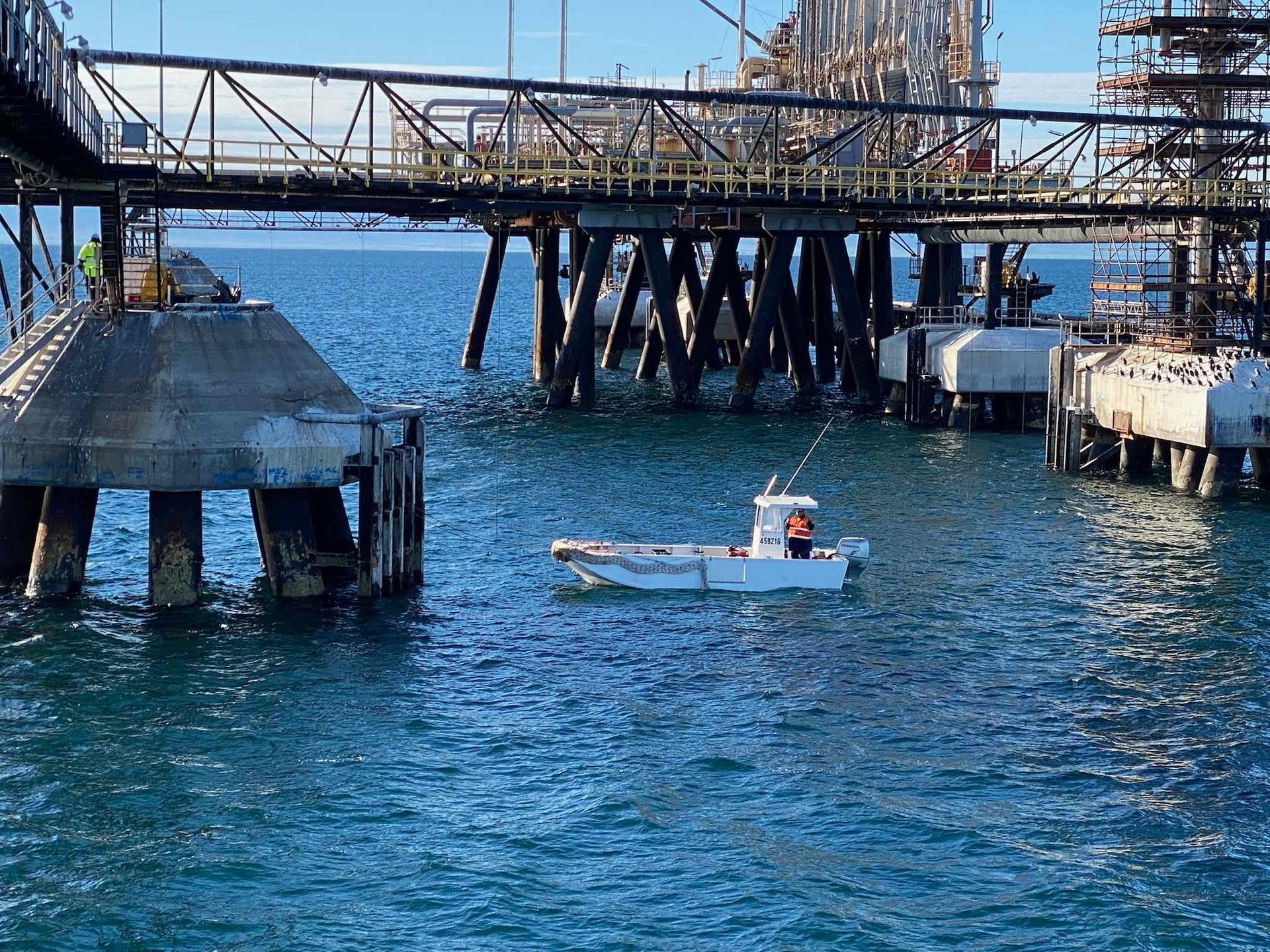
Work boats are often the most mobile part of a marine construction setup. They can carry supervisors, divers, survey personnel, trades, tools, and smaller equipment between a launch point, shore base, barge, and work front. This can be particularly valuable where construction activities are spread along a river, around several bridge piers, or across different sections of a jetty or marina.
A powered work boat can also respond to changing project needs during the day. If a crew needs to inspect another location, collect equipment from shore, move around an obstruction, or reposition beside the opposite side of a structure, the vessel can move without requiring the main work platform to be relocated.
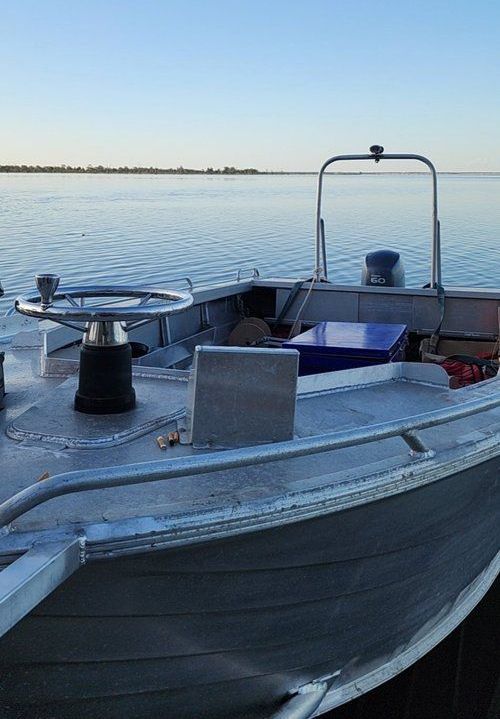
Send It Marine's Seahorse work vessel is a compact 5.1 m aluminium boat listed for crew transfers, infrastructure inspections, minor marine construction, and barge pushing. Its role illustrates where a smaller powered vessel can complement larger marine plant by handling movement and access rather than acting as the primary work platform.
For projects needing more deck capacity, Syd is an 8.5 m powered aluminium work boat with a listed 3,000 kg deck capacity and optional crane configuration. This gives project teams another option where mobility needs to be combined with a more substantial working deck.
How do barges create a floating construction platform?
A barge can provide the working area that is difficult to create beside marine infrastructure using smaller vessels. Its larger deck may be used to stage materials, carry equipment, support temporary works, hold pumps or tools, accommodate project personnel, or provide space for selected plant where the barge is designed and approved for the proposed load.
This makes barges particularly useful on work that stays concentrated around one area for longer periods. Instead of repeatedly moving materials from shore in small loads, the project can position a larger quantity of equipment and supplies close to the work face.
Send It Marine's Darter pontoon barge is a 10.2 m non-propelled aluminium barge with approximately 4.1 m by 10.2 m of usable deck area and a listed 10,000 kg total deck capacity. It is fundamentally different from a small work boat because its primary value is deck space and load capacity rather than standalone propulsion.
Our earlier guide to how pontoon barges are used in marine construction looks more closely at bridge works, plant, material transport, and floating work-platform applications.
How are materials and equipment moved to a water-based work site?
Material transport is one of the most practical uses of work boats and barges. Marine construction may require timber, steel, concrete components, pumps, generators, scaffolding, temporary works, tools, lifting gear, mooring hardware, recovery equipment, or other materials to reach an area with limited road access.
Smaller loads can often travel on a work boat where the vessel's deck capacity and approved operating conditions allow it. Larger or bulkier loads may suit a barge because the wider deck provides more space for load distribution and securing.
The transport plan needs to account for more than total weight. Project teams should consider concentrated loads, dimensions, deck arrangement, stability, loading and unloading methods, securing points, water depth, ramp or crane access, and how the cargo will be transferred when the vessel reaches the work area.
A barge can also function as a staging point. Materials can be loaded in a planned sequence and positioned close to the construction team, while powered work boats handle personnel movement and smaller supply runs. This can reduce unnecessary movement of the primary work platform.
How do work boats and barges support bridge and jetty construction?
Bridges, jetties, pontoons, wharves, and similar structures contain components that may be difficult to reach from land. Piles, piers, abutments, fenders, moorings, underside elements, and water-facing sections often require crews or equipment to approach from the water.
A work boat may provide quick access around individual piles or along different sections of the structure. It can carry inspection personnel, tools, divers, or smaller items and reposition as the work progresses.
A barge can remain beside the structure as a more stable work and staging platform. Depending on the project and vessel configuration, it may carry materials, pumps, temporary works, selected plant, lifting equipment, or other systems needed for the construction activity.
For projects involving underwater condition checks before or during construction, vessel support can also be coordinated with commercial diving support. This allows underwater observations and access requirements to be integrated with the wider construction methodology rather than treated as a separate mobilisation.
What role do vessels play in piling, mooring, and installation work?
Marine installation work often involves components that need to be positioned accurately over or beside the water. Mooring systems, anchors, chains, piles, signage, pontoon components, fenders, and other infrastructure may need to be moved from shore, held temporarily, lowered, or positioned while other crew members complete the installation.
A work boat can support positioning, crew movement, and access around the installation point. A barge may provide the main working deck and carry the materials or equipment being installed. If lifting is required, a crane-equipped vessel or other suitable marine lifting arrangement may be added to the project setup.
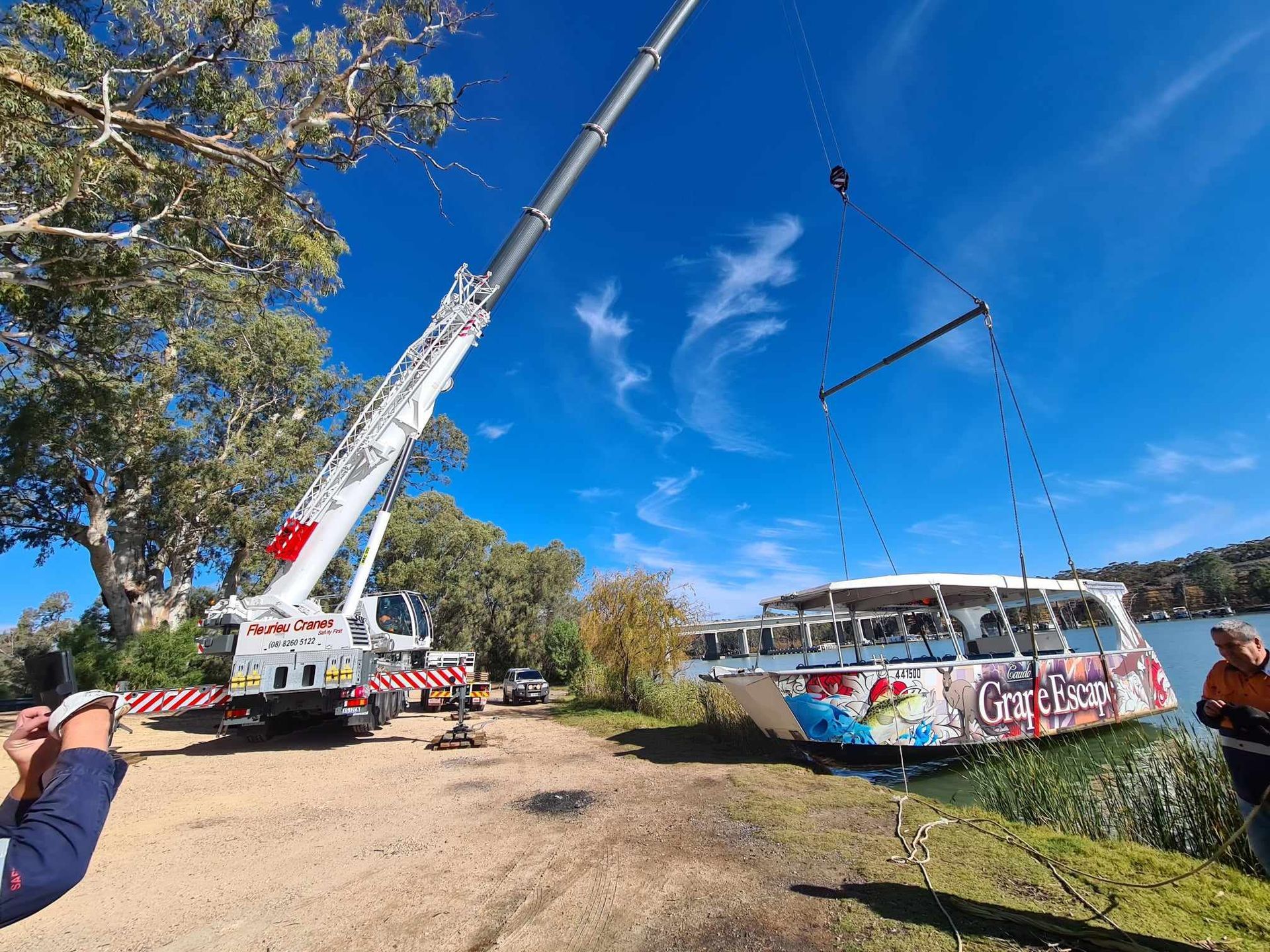
Send It Marine provides marine crane capability for suitable water-based projects. As discussed in our guide on when a marine crane is needed, the lift needs to be planned around the load, working radius, vessel stability, water conditions, and pickup and placement points rather than crane capacity alone.
These activities demonstrate why marine construction vessels are often selected as a coordinated package. The boat that transports crew may not be the best platform for a large load, and the barge that carries the materials may need another vessel to position it.
How do unpowered barges move around a construction site?
Many pontoon and construction barges are not self-propelled. They require a suitable powered vessel or other approved arrangement to push, tow, or reposition them between the launch point and work site and between work fronts.
This means barge movement needs to be part of the project plan. Wind, current, tide, cargo, waterway width, bridge clearances, visibility, anchoring, communications, and the suitability of the powered vessel can all affect relocation.
The Australian Maritime Safety Authority provides construction barge safety guidance covering commercially operated construction barges, including work-platform use, heavy deck loads, stability, access, and relocation considerations. These factors are particularly relevant when a barge is carrying construction equipment or materials and needs to be moved during the project.
Send It Marine lists Seahorse for barge-pushing applications, while Darter is a non-propelled barge. That combination shows how separate vessels can be used for separate functions rather than expecting a single platform to provide propulsion, transport, deck capacity, and work access at the same time.
How do marine vessels support commercial diving and underwater construction tasks?
Where construction includes underwater inspection, investigation, recovery, or other diver-access requirements, the vessel becomes part of the diving work environment. It may carry divers and equipment, provide access to the water, transport the team between work points, or provide a platform close to the submerged structure.
For mobile inspection work, a powered work boat may be more practical because it can move between several locations. For longer-duration work concentrated beside one asset, a barge may provide useful deck space for equipment and project personnel. In some cases, both may be used together.
The Pig, Send It Marine's 7.3 m survey and diving vessel, includes water-level dive doors and is configured around diving and inspection access. This makes it a different type of project vessel from Darter or Syd and reinforces the need to select around the actual work task.
Underwater work should also be coordinated with surface construction activities so divers are not treated as an isolated workstream. Vessel positioning, lifting, plant operation, access, and other marine traffic can all affect how the underwater component fits into the project sequence.
How can vessel requirements change during a marine construction project?
The vessel combination needed during mobilisation may not be the same as the one needed during construction or demobilisation. Early stages may focus on inspections, survey access, and moving small crews. The main construction stage may require a larger barge, more deck capacity, or lifting equipment. Demobilisation may then shift back toward transport and removing materials from the site.
A typical project could therefore use a smaller work boat for initial inspections, a barge for staging materials during construction, a crane-equipped work boat for selected lifts, and a powered support vessel for moving crews or repositioning the barge.
This staged approach can be more practical than selecting the largest available vessel for the entire job. Oversized plant can create unnecessary mobilisation and access challenges, while undersized plant can cause repeated trips, insufficient deck area, or difficulty handling project loads.
Our comparison of work boats vs barges for marine projects provides a useful starting point for deciding which function should drive the vessel selection.
What should project managers consider before arranging marine vessels?
A clear project brief makes it easier to match vessel capability to the work. The marine contractor needs to understand not just the project location, but how the boats and barges will actually be used.
Useful information can include:
- project location and waterway
- type of bridge, jetty, pontoon, mooring, or marine infrastructure involved
- expected project dates and duration
- number of personnel requiring transport or workspace
- material and equipment weights and dimensions
- required deck working area
- whether lifting, diving, inspection, or recovery work is involved
- available launch, ramp, wharf, or shoreline access
- known water depth, current, tide, and bridge-clearance restrictions
- how frequently the vessels need to move during the project
- whether wet hire, dry hire, or a broader marine support arrangement is required
Providing plans, site photographs, load information, and access details early can help identify whether the job suits a compact powered work boat, a larger work boat, a pontoon barge, or a combination of vessels and marine equipment.
Marine construction vessel support across South Australia
Marine construction projects across South Australia can involve very different operating environments, from the River Murray and Riverland to Adelaide, coastal waters, marinas, bridges, and remote regional waterways. The vessel arrangement that works for one site may be unsuitable for another because access, water conditions, project loads, and construction methodology can change substantially.
Send It Marine's fleet includes powered work boats, a survey and diving vessel, a pontoon barge, marine lifting capability, and other specialised marine equipment for suitable projects. Its current marine construction service is focused on small to medium-scale work, including vessel access, material and crew transport, diving support, and water-based project capability.
If you are planning a bridge, jetty, pontoon, infrastructure, or other marine construction project, contact the Send It Marine team with the project location, expected loads, access conditions, personnel requirements, and planned work scope. Those details provide the starting point for matching the work boats, barges, and supporting marine equipment to each stage of the project.