What Should You Consider When Hiring Marine Plant or Work Boats?
Hiring marine plant or a commercial work boat is not simply a matter of choosing the biggest vessel available. The right setup depends on what the project needs to move, where the work will take place, how people and equipment will access the site, and whether the vessel needs to act as transport, a working platform, a diving base, a lifting platform, or a combination of these roles.
For marine construction, inspection, recovery, flood-response, and infrastructure projects, a poor vessel match can create unnecessary mobilisation, repeated trips, restricted access, or a lack of usable deck space once the job is underway. A better approach is to define the work first, then match the vessel, barge, crane, or other marine plant to the actual operating conditions.
Send It Marine provides commercial vessel and marine plant hire across South Australia, including powered work boats, a pontoon barge, marine lifting equipment, and recovery equipment. This guide explains the main questions to consider before arranging hire so project teams can provide the information needed to select a practical setup.
Start with the job, not the vessel name
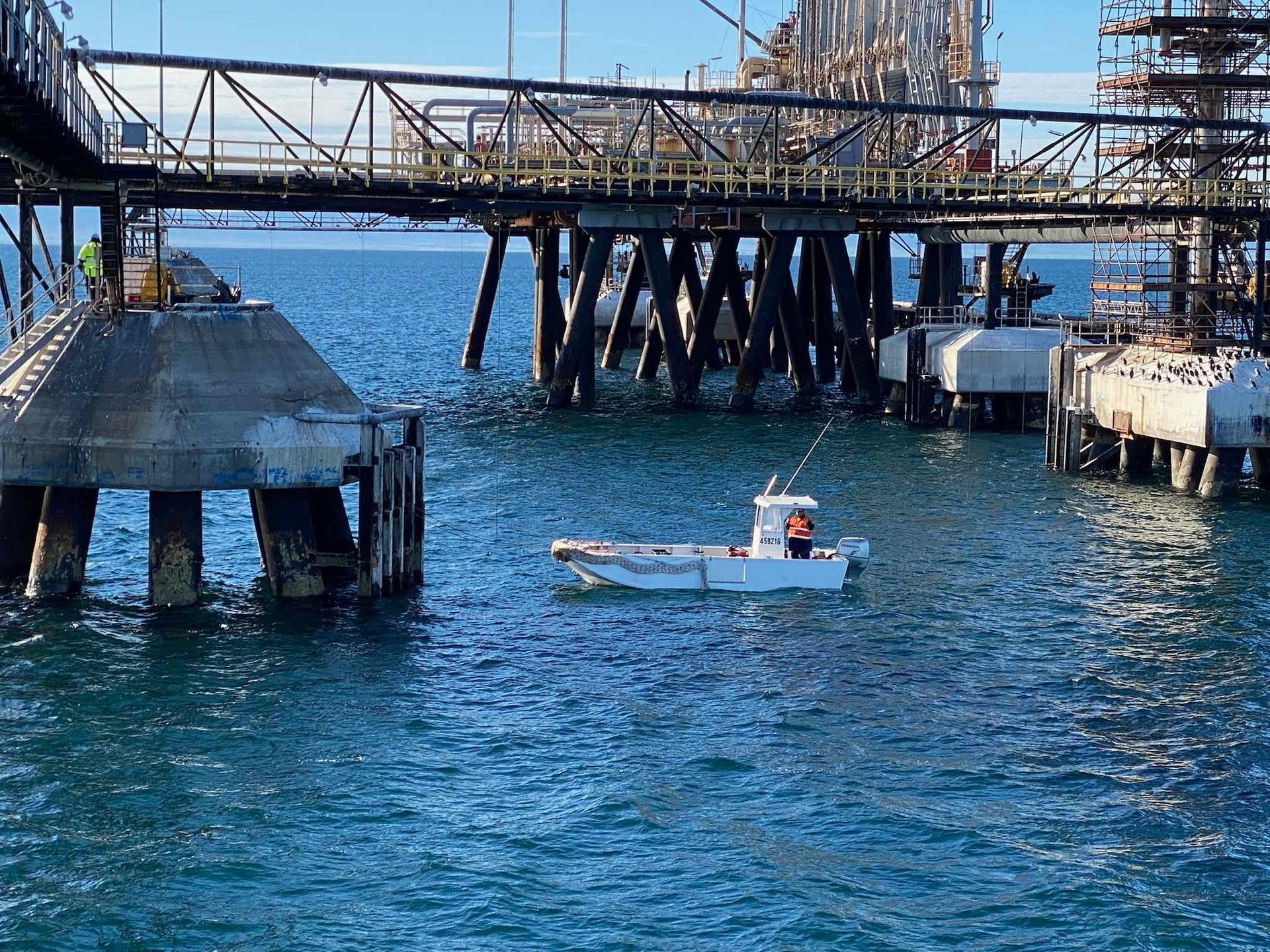
The most useful starting point is to describe what the marine plant needs to do. Two projects may both ask for a work boat, but one may only require crew transfers between a ramp and a bridge pier while the other needs to carry pumps, tools, lifting gear, and several project personnel for a full day on the water.
Before comparing individual vessels, define the core task. Is the priority movement, deck space, lifting, diving access, carrying materials, barge pushing, inspection support, or recovery? Does the vessel need to remain beside one structure for hours, or move between several work fronts throughout the day?
The answer determines which vessel characteristics matter most. A compact powered work boat may suit mobile inspection work, while a larger work boat may be better where deck capacity is important. A non-propelled barge can provide significantly more working area and payload, but it also needs a suitable method of movement and positioning.
Our guide comparing a work boat and barge for marine projects provides a useful first comparison if the required platform is not yet clear.
What does marine plant hire include?
Marine plant is a broad term. Depending on the contractor and project, it can include powered work boats, barges, pontoons, marine cranes, recovery equipment, diving-support vessels, pumps, and other specialist equipment used to complete work on or around the water.
For a project manager, it is useful to separate the vessel from the additional equipment it may need to carry or work alongside. A work boat may provide access and transport, but the project may also require a crane, recovery airbags, diving equipment, or a barge to create enough working space.
The most efficient setup is often a combination rather than one oversized vessel. A smaller powered work boat can move crews and handle frequent repositioning while a barge remains beside the main work area with materials and equipment on deck.
Send It Marine's fleet is structured around this type of mixed requirement, with powered vessels, the Darter pontoon barge, marine crane capability, and recovery equipment available for suitable projects.
Should you choose wet hire or dry hire?
Wet and dry hire arrangements should be clarified early because the terms can change what the client is responsible for. In general equipment-hire language, wet hire usually includes an operator or crew, while dry hire usually refers to the equipment being supplied without the provider's operating personnel. Marine hire can involve additional vessel, competency, insurance, and operational requirements, so the exact inclusions should always be confirmed with the supplier.
Send It Marine's current vessel-hire offering includes both wet and dry hire options. The appropriate arrangement depends on the vessel, the project, and who will be operating or managing it during the work.
Wet hire can be practical where the project wants the vessel, operator, and marine support integrated into the job. Dry hire may be considered where the client already has suitable personnel, operating systems, and capability, and the specific vessel can be supplied under that arrangement.
Do not assume that dry hire automatically means any project worker can operate the vessel. Commercial vessel use in Australia is subject to operational, crewing, safety-management, and competency requirements. The proposed operator and project activity need to be appropriate for the vessel and its commercial use.
How much deck space and carrying capacity do you actually need?
Deck capacity is one of the first specifications clients tend to compare, but the total weight figure only tells part of the story. The physical size of the load, where it will sit, how the weight is distributed, the number of people on board, and how equipment will be loaded and unloaded can be just as important.
For example, Send It Marine's Syd work boat is listed with approximately 2.5 m by 7.5 m of usable deck space and a 3,000 kg deck capacity. That provides substantially more work area than a small tinny, but a proposed load still needs to be assessed against the vessel configuration and project conditions rather than relying on the headline capacity alone.
For heavier or bulkier loads, the Darter pontoon barge has approximately 4.1 m by 10.2 m of usable deck and a listed total deck capacity of 10,000 kg. Because Darter is non-propelled, the project must also account for how it will be launched, moved, positioned, and recovered.
When providing an enquiry, include the estimated total load, the heaviest individual item, the dimensions of major equipment, the number of personnel expected on board, and whether plant will operate from the deck rather than simply be transported.
How will the vessel reach the work area?
A vessel can have the right payload and still be unsuitable if it cannot reach the project site. Water depth, launch access, bridge clearance, channel width, current, tide, bank conditions, and the distance between the launch point and work area can all affect vessel selection.
Regional and inland projects may also have limited ramps, wharves, or crane access. Mobilising a large barge can be unnecessary for a short inspection if a smaller vessel can launch closer to the site, while a compact work boat may not provide enough deck area for a long-duration construction activity.
Project teams should provide the proposed launch or access point where known, along with site photographs, waterway dimensions, bridge or overhead restrictions, expected water depth, and any known constraints around vehicle or trailer access.
These details are particularly important across South Australia, where projects can range from the River Murray and Riverland to Adelaide, coastal waters, marinas, and remote regional waterways.
How many people need to be carried?
The amount of open deck space on a vessel does not by itself determine how many people can be carried. Commercial vessels operate under conditions that can specify permitted crew, passengers, and special personnel, and those limits need to be respected for the proposed activity.
AMSA's current domestic commercial vessel requirements state that commercial vessels may need a certificate of survey, certificate of operation, safety management system, unique vessel identifier, and appropriately qualified crew, subject to applicable exemptions. A certificate of survey can also identify the service categories and the number of crew, passengers, and special personnel a vessel is permitted to carry.
For a hiring client, the practical step is to tell the supplier how many people need to be on the vessel and what they will be doing. A diver, survey technician, engineer, construction worker, and vessel crew member can have different roles in the operation, so personnel requirements should be discussed rather than treated as an afterthought.
Our guide to what "boat in survey" means explains the survey and operating context in more detail.
Do you need lifting capability?
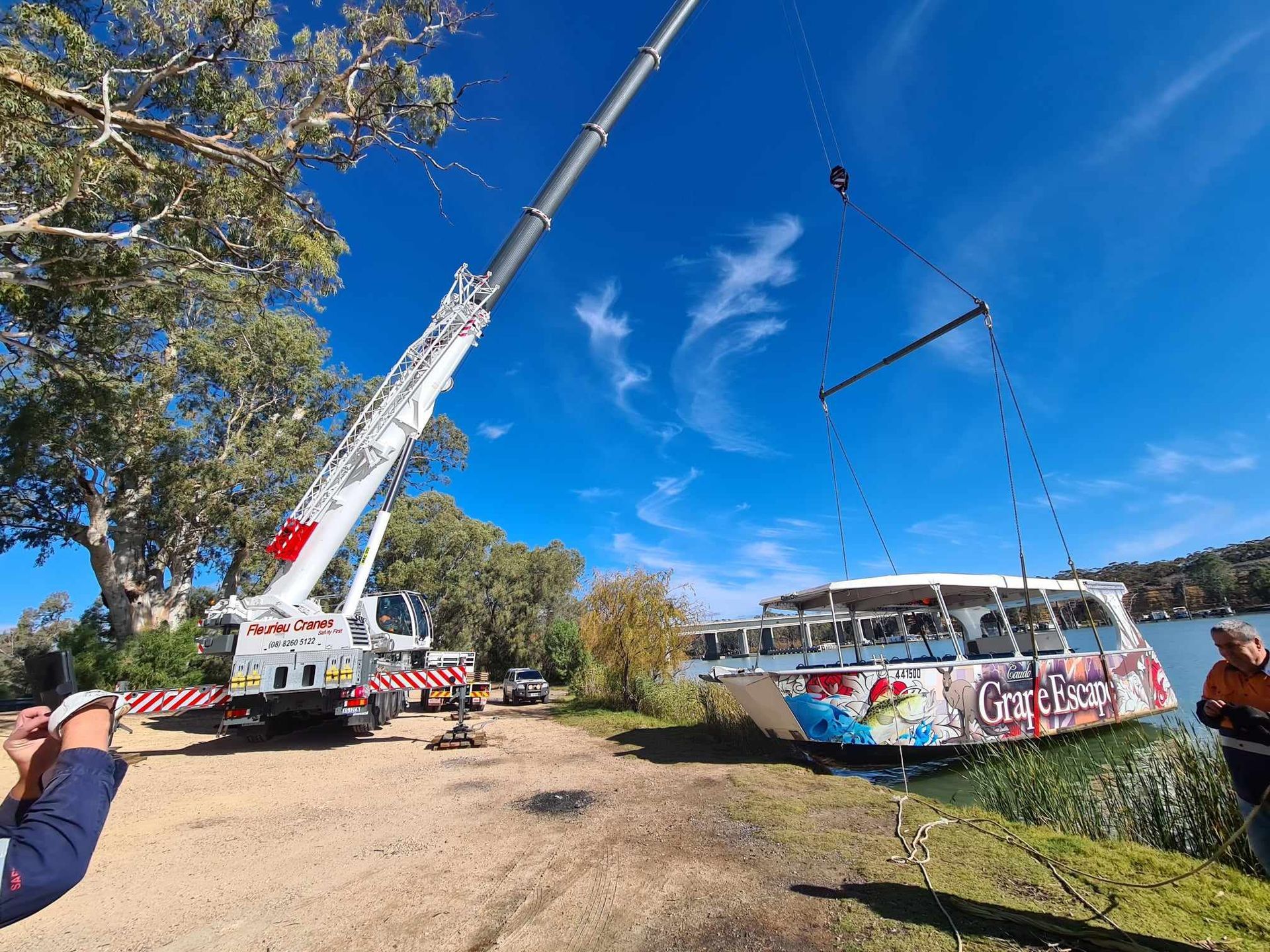
If materials, moorings, pumps, recovered objects, or construction components need to be lifted from the water or transferred between shore and vessel, lifting capability should be considered before the vessel is booked.
A vessel with sufficient deck space is not automatically suitable for a crane lift. The crane, vessel stability, working radius, load weight, pickup position, placement position, water conditions, and overall operating configuration all affect what can be lifted safely.
Syd can be configured with an optional crane, while Send It Marine also provides marine crane capability for suitable projects. Because the public site does not specify a universal maximum crane lifting capacity, each proposed lift should be assessed from the actual load and reach requirements.
If lifting is likely, provide the load weight and dimensions, where it is currently located, where it needs to be placed, and the approximate horizontal reach required. Photographs or drawings can make the initial assessment much more useful.
Does the project involve diving, inspection, or work at water level?
Some vessels are designed around particular activities rather than maximum payload. If a project includes commercial diving, underwater infrastructure inspection, or work close to the waterline, access to and from the water can become more important than carrying capacity.
Send It Marine's The Pig survey and diving vessel has water-level dive doors and is configured around diving and marine infrastructure inspection work. A vessel like this may be more practical for a diver-led inspection than a larger platform that offers greater deck capacity but less convenient water access.
For longer-duration underwater work around one structure, a barge or second work platform may also be useful for equipment and project personnel. The correct combination depends on the inspection scope, location, water conditions, and how frequently the team needs to reposition.
This is another reason the vessel should be selected from the work method rather than simply from length, engine size, or deck capacity.
How often will the vessel need to move?
Movement frequency is an important but sometimes overlooked part of vessel selection. A powered work boat is generally well suited to projects that require repeated travel between a ramp, shore base, bridge piers, inspection points, or multiple assets.
A barge is more useful where a larger platform can remain near one work face for an extended period. If the barge is non-propelled, every relocation requires a suitable powered vessel or other approved arrangement, so frequent repositioning should be built into the project plan.
For projects involving several vessels, it can be useful to separate transport from the main work platform. A smaller vessel can handle crew transfers and supply runs while the larger barge stays loaded and positioned near the construction activity.
This approach is explored further in our guide to how work boats and barges support marine construction projects.
What should you check about commercial vessel documentation?
When hiring a vessel for commercial work, suitability includes both the physical vessel and the operation under which it will be used. AMSA's current guidance says domestic commercial vessels generally need relevant vessel permissions and operational systems, subject to exemptions.
A certificate of survey is evidence that a vessel has been surveyed against applicable design, construction, stability, and safety-equipment standards. A certificate of operation describes the vessels used in an operation, how and where they operate, and other conditions. AMSA also requires safety management systems for domestic commercial vessels, with current Marine Order 504 requirements applying from 1 June 2025.
Clients do not need to become marine-regulation specialists before hiring a boat, but they should be clear about the proposed commercial activity, operating area, personnel, and equipment. The vessel provider can then identify what configuration and documentation are relevant to the proposed job.
For current regulatory guidance, refer directly to the Australian Maritime Safety Authority's domestic commercial vessel requirements.
What will mobilisation and demobilisation involve?
Marine plant hire can involve considerably more than the daily vessel hire itself. The equipment may need to be trailered to a regional site, launched from a suitable ramp, craned into the water, pushed or towed to the work area, loaded with equipment, and recovered again when the project is complete.
The distance from the supplier's base to the site can therefore influence the practical vessel choice. A slightly smaller trailerable work boat may be easier to mobilise to a remote location than a larger platform that requires additional transport and launching arrangements.
Project duration also matters. A more involved mobilisation can make sense where a barge will remain on site for an extended construction program, but may be inefficient for a short inspection or one-day crew transfer.
When comparing hire options, ask what mobilisation, launch, retrieval, fuel, crew, transport, and supporting equipment are included in the quoted arrangement so the project can compare complete setups rather than vessel day rates in isolation.
What information should you provide when requesting a quote?
A useful marine plant hire enquiry gives the supplier enough information to understand the job before recommending equipment. At minimum, include:
- project location and waterway
- type of work being undertaken
- expected project dates and duration
- number and role of personnel requiring vessel access
- estimated equipment and material weights
- dimensions of large or unusual loads
- required deck working area
- whether diving, lifting, inspection, recovery, or barge pushing is involved
- known launch, ramp, wharf, or shoreline access
- water depth, current, tide, and bridge-clearance constraints where known
- how often the vessel or barge will need to move
- whether wet hire, dry hire, or a broader marine support package is being considered
Plans, photographs, drawings, equipment data, and approximate load information can also help narrow the options. Where a value is not yet known, identify that clearly so it can be investigated before mobilisation.
Marine plant and work boat hire across South Australia
The right marine plant package depends on the work, not a generic vessel category. A compact work boat may be ideal for crew transfers and inspection access, Syd may suit a project needing greater deck space and optional lifting support, Darter can provide a larger floating platform for substantial loads, and The Pig is configured around diving and inspection work.
Send It Marine provides wet and dry commercial vessel hire for suitable projects across South Australia, with fleet and marine equipment options that can be matched to construction, inspection, recovery, flood-response, and other water-based work.
If you are planning a marine project, contact the Send It Marine team with the location, work scope, personnel, equipment, access conditions, and expected loads. Those details provide the practical starting point for selecting the appropriate work boat, barge, marine plant, and supporting equipment.