Work Boat vs Barge: Which Vessel Does Your Marine Project Need?
Choosing between a work boat and a barge can change how efficiently a marine project is delivered. Both can provide access, carry equipment, support construction crews, and operate around bridges, jetties, pontoons, waterways, and other marine assets, but they are designed for different jobs. A project that mainly needs fast crew movement and manoeuvrability may suit a powered work boat, while one that needs a large deck area or higher load capacity may be better suited to a barge.
The decision is not simply about vessel size. Project managers also need to consider propulsion, deck capacity, water depth, access, lifting requirements, the number of people on board, equipment loads, mobilisation, and how the vessel will be positioned while work is underway. Send It Marine provides commercial work boat and marine vessel hire across South Australia, including powered work boats and a pontoon barge suited to different project requirements.
What is a work boat?
A work boat is a powered vessel used to move people, equipment, or materials and support practical work on the water. Unlike a recreational boat, a commercial work boat is selected around the tasks it needs to perform, such as crew transfer, diving support, inspections, marine construction, recovery work, barge handling, or moving equipment between locations.
Work boats are generally valuable where mobility matters. Because they have their own propulsion, they can travel between work areas, reposition during the day, respond to changing access requirements, and support tasks that involve several locations along a river, marina, harbour, or coastline.
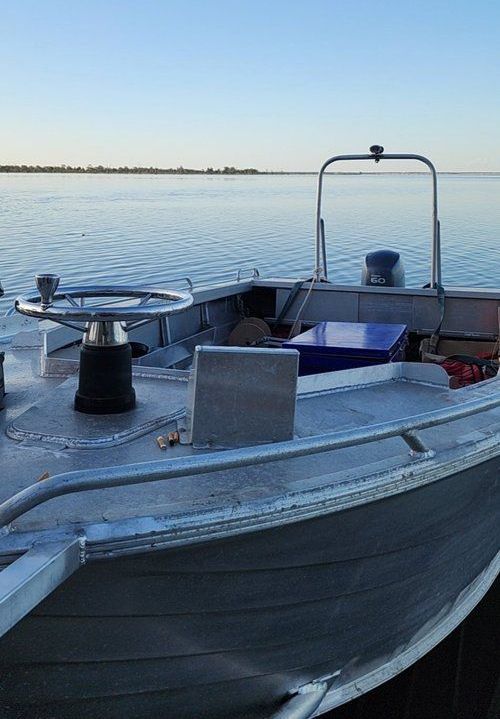
The term covers a wide range of vessel sizes and configurations. A compact aluminium vessel may be suitable for crew transfers or inspections, while a larger work boat can provide more deck space, carrying capacity, and room for lifting or construction equipment.
What is a barge?
A barge is typically a broad, stable marine platform used to carry loads, equipment, plant, materials, or personnel over water or provide a working deck at a project site. Some barges are powered, while others are non-propelled and need to be pushed, towed, or otherwise repositioned by another vessel.
For construction projects, the main advantage of a barge is often its deck area and load capacity. A pontoon or construction barge can create a floating platform for equipment and materials where road or shore access is limited. Australian barge operators commonly use these platforms for bridge and wharf works, piling, crane and excavator operations, diving, dredging, demolition, transport, and temporary water-based access.
The Australian Maritime Safety Authority notes that construction barges used commercially are domestic commercial vessels and can be used as work platforms or to transport equipment, supplies, and waste. AMSA also highlights the need to manage the specific safety and certification requirements associated with construction barge operations. See its guidance on construction barge safety.
Work boat vs barge: what are the main differences?
The easiest way to compare the two is to look at how the vessel needs to function during the project. A work boat is generally stronger on movement and manoeuvrability, while a barge is generally stronger on deck space, carrying capacity, and acting as a stable work platform.
Typical differences include:
- Propulsion: work boats are usually self-propelled, while many barges rely on another vessel for pushing or towing.
- Manoeuvrability: work boats can be easier to reposition around structures, narrow waterways, or multiple work areas.
- Deck area: barges generally provide a larger uninterrupted deck for equipment, materials, or project operations.
- Load capacity: barges can be better suited to heavier loads where the vessel is designed for them.
- Working platform: a barge can provide a more practical base for plant, materials, or longer-duration marine construction tasks.
- Crew and equipment movement: powered work boats are often better suited to repeated transfers between shore, vessels, and work areas.
These are general differences rather than fixed rules. The actual vessel still needs to be matched to the load, waterway, operating conditions, access, and project scope.
When is a work boat the better option?
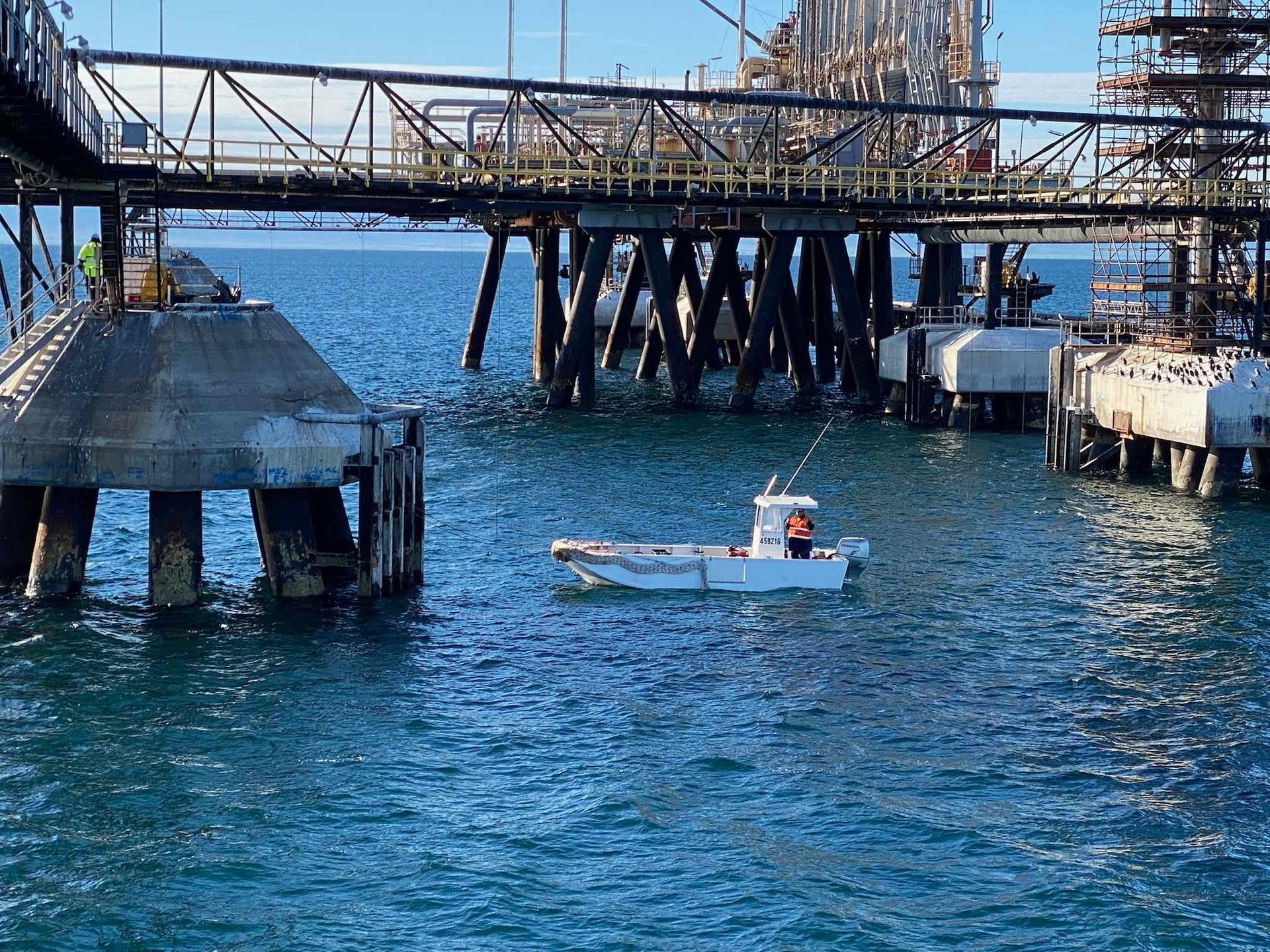
A work boat is often the better starting point when the project depends on mobility. Inspection crews, divers, survey personnel, supervisors, and construction teams may need to move between several points during a shift, carry equipment from shore, or work close to structures where precise vessel positioning is important.
Common work boat applications can include:
- crew and equipment transfers
- commercial diving support
- marine infrastructure inspections
- flood-response and investigation work
- vessel and object recovery support
- mooring installation or maintenance support
- light marine construction
- pushing or positioning barges
Send It Marine's Seahorse work vessel, for example, is a 5.1 m aluminium vessel used for crew transfers, infrastructure inspections, minor marine construction, and pushing barges. Its compact size and powered configuration suit tasks where movement and access are important.
For inspection and diving projects, a vessel can also act as the base for divers, equipment, and project personnel. Where that is the main requirement, vessel configuration may matter more than raw deck capacity.
When is a barge the better option?
A barge becomes more attractive when the project needs a larger working platform or needs to move substantial equipment and materials over water. Instead of repeatedly transporting smaller loads, a barge may allow a larger quantity of plant, materials, tools, or recovered assets to be carried or positioned together.
Typical barge applications can include:
- marine construction work platforms
- transporting heavy equipment or materials
- supporting crane or lifting operations
- bridge, jetty, and wharf works
- carrying recovered assets or debris
- supporting diving or underwater construction teams
- temporary access to sites with poor shore access
- providing deck space for tools, materials, and project equipment
Send It Marine's Darter pontoon barge is a 10.2 m non-propelled aluminium barge with approximately 4.1 m by 10.2 m of usable deck space and a listed 10,000 kg deck capacity. That makes it fundamentally different from a smaller powered work boat: its strength is as a transport and working platform rather than as a highly manoeuvrable standalone vessel.
What if the project needs both a work boat and a barge?
Many marine projects are not a genuine either-or decision. A non-propelled barge may need a work boat to push, tow, or position it, while crews may still need a smaller powered vessel for transfers, inspections, or access around the main working platform.
This combination can be particularly useful on construction projects. The barge can remain at the work area carrying equipment and materials, while the work boat handles movement between shore and the site or supports tasks around the structure. A smaller vessel may also help reposition the barge where site conditions and the vessel configuration allow it.
Send It Marine's fleet reflects this type of mixed setup. Seahorse is specifically listed for barge pushing, while Darter is a non-propelled pontoon barge. This allows the project vessel mix to be selected around both transport and working-platform requirements rather than expecting one vessel to perform every role.
How does deck load affect vessel selection?
Deck capacity is one of the most important practical differences between vessel options. Project teams need to think about the combined weight of materials, tools, machinery, recovered items, project personnel, and any lifting equipment that will be carried or operated from the vessel.
A vessel should not be selected simply because the equipment physically fits on the deck. The vessel's approved operating limits, load distribution, stability, freeboard, lifting arrangement, and working conditions all need to be considered as part of project planning.
Send It Marine's Syd work boat provides a useful middle ground between a small work boat and a large barge. The 8.5 m aluminium work boat has a listed 3,000 kg deck capacity and can be configured with an optional marine crane. This can suit projects that need powered mobility and meaningful deck capacity without necessarily requiring a full pontoon barge.
By comparison, Darter's listed 10,000 kg deck capacity and larger deck area suit substantially heavier or bulkier project loads. The right choice depends on what is being carried and how the vessel needs to operate once it reaches the work area.
How important are manoeuvrability and water access?
Large deck area is not useful if the vessel cannot reach or work effectively at the project site. Water depth, channel width, bridge clearances, ramps, launch facilities, currents, tides, shoreline access, and the space available to turn or position a vessel can all influence what is practical.
A compact powered work boat can be more useful around tight infrastructure, narrow river sections, marinas, or jobs requiring repeated repositioning. A barge may require more room to manoeuvre and may need a separate powered vessel or other system to place it accurately.
Regional projects add another consideration: mobilisation. Road-transportable vessels can be valuable where marine plant needs to reach inland waterways or remote sites. The transport method, launch point, crane requirements, and road access may therefore need to be considered before the vessel is chosen.
Do you need a crane or lifting capability?
Lifting requirements can change the vessel choice. If a project involves placing moorings, handling construction materials, recovering objects, or transferring equipment, the team needs to consider not only the crane or lifting device but also the vessel supporting it.
A powered work boat with an onboard crane may suit smaller or more mobile lifting tasks, while a barge can provide a broader platform for larger equipment or separate lifting systems. Send It Marine's Syd can be used with an optional crane, and the company also has marine crane capability for suitable projects.
The lifting arrangement should be planned around load weight, reach, rigging, vessel stability, water conditions, and where the load needs to be placed. A barge is not automatically the right platform for every lift, just as a work boat is not automatically suitable because it has available deck space.
What vessel is best for marine construction?
Marine construction projects often use several types of vessels because the work changes between mobilisation, material handling, inspection, diving, installation, and demobilisation. A work boat may move crew and equipment, a barge may provide the main working platform, and a crane or other specialist equipment may be added where lifting is required.
For bridge, jetty, mooring, retaining, or other water-based works, project managers should start by defining what the vessel needs to do rather than selecting a vessel by name. Send It Marine's marine construction project support can combine suitable work boats, barges, diving capability, and marine equipment according to the project requirements.
A useful vessel brief should cover the work location, expected crew numbers, material and equipment weights, required deck space, water depth, access points, whether lifting is involved, how often the vessel needs to move, and what needs to happen at the end of each work stage.
Wet hire or dry hire: what should you consider?
Send It Marine lists both wet and dry hire options across its commercial vessel fleet. The appropriate arrangement depends on the project team's capability, the vessel involved, the operating requirements, and whether the job also needs marine personnel, divers, or other specialist support.
A wet-hire style arrangement can be useful where the project needs the vessel to be integrated with a marine crew or broader service scope. Dry hire may suit organisations with the appropriate personnel and capability to operate the vessel within the agreed conditions. The exact requirements should be confirmed for the specific vessel and project before mobilisation.
Choosing a work boat or barge in South Australia
South Australian marine projects range from River Murray and Riverland works to Adelaide, coastal sites, marinas, and remote regional waterways. The right vessel can therefore vary substantially between jobs. A compact work boat that performs well on a river inspection may not provide enough deck area for a construction project, while a large barge may be unnecessary for a job centred on crew movement or diving access.
As a practical starting point, choose around the job: use a work boat where propulsion, mobility, transfers, and manoeuvrability are central; consider a barge where deck area, load capacity, or a stable floating work platform is the priority; and consider a combined setup where both functions are required.
If you are planning a marine project and are unsure which vessel configuration fits the scope, contact the Send It Marine team with the project location, expected loads, crew requirements, access conditions, and the work that needs to be completed. Those details provide a practical starting point for comparing the available work boats, barge, and supporting marine equipment.