When Do You Need a Marine Crane for a Water-Based Project?
A marine crane becomes useful when a project needs to lift, lower, position, recover, or transfer a load where ordinary land-based crane access is limited or unavailable. That can include construction materials beside a jetty, mooring components in a river, equipment being transferred between vessels, or an object that needs to be recovered from the water. The important question is not simply whether a crane can reach the load. The vessel, crane, rigging, water conditions, load weight, working radius, and final placement all need to work together as one lifting system.
For smaller and medium-scale water-based projects, a vessel-mounted crane or crane-equipped work boat can provide a practical alternative to setting up a large shore-based crane or dedicated heavy-lift barge. Send It Marine provides marine crane hire across South Australia for suitable marine construction, recovery, and specialised lifting tasks, with work boats and barges available to support the wider project setup.
What is a marine crane?
A marine crane is a crane used from a vessel, barge, pontoon, or other floating platform to lift or position loads on or around the water. The crane may be permanently installed on the vessel or mounted as part of a specific operating configuration.
Safe Work Australia describes vessel-mounted cranes as cranes mounted on ships, barges, pontoons, or other vessels for lifting loads. Typical tasks can include moving loads on or off a vessel, transferring loads between vessels, holding items in position, pile removal, and grabbing operations. Its vessel-mounted crane guidance also highlights the additional factors that arise when the crane is operating from a floating platform rather than stable ground.
Marine cranes vary greatly in capacity, reach, configuration, and vessel type. This means crane selection should be based on the actual lift rather than a general assumption that any marine crane can complete any water-based task.
When is a marine crane needed on a water-based project?
A marine crane is typically considered when the load needs to be handled from the water side of a structure or when a floating platform provides better access than the shore. The job may involve construction, maintenance, inspection support, recovery, material handling, or installation.
Common situations can include:
- lifting materials onto or from a jetty, pontoon, or marine structure
- placing moorings, anchors, chains, buoys, or other marine components
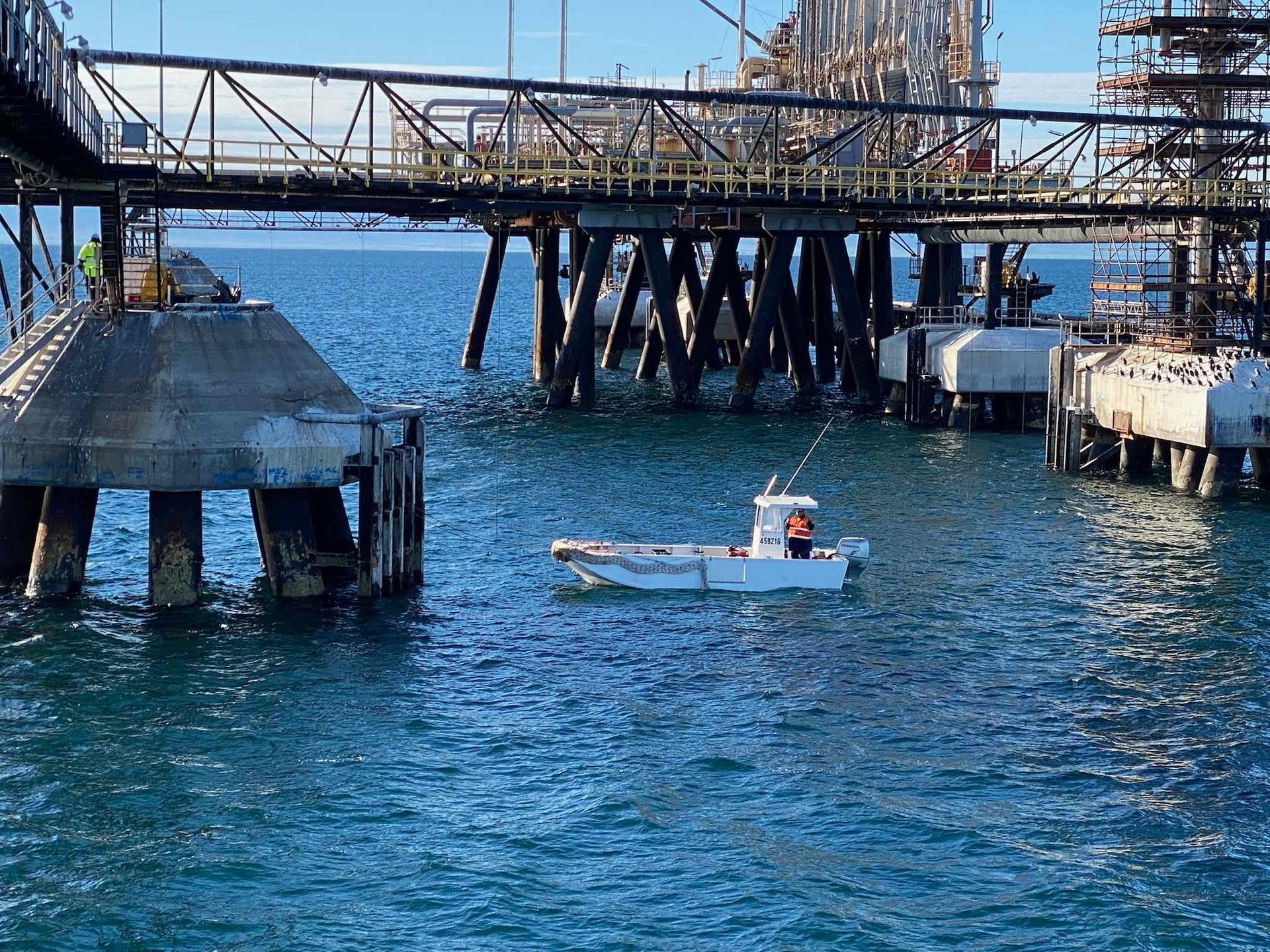
- handling construction materials beside bridge piers or waterfront works
- lifting pumps, tools, temporary works, or project equipment between shore and vessel
- supporting marine infrastructure installation or maintenance
- recovering submerged or partially submerged objects
- moving equipment between work boats and barges
- placing or removing components where shore-based crane access is constrained
The crane is only one part of the project. A suitable vessel may also be required to carry the crane, provide deck space, transport crew, hold equipment, or position the lift close enough to the work area.
When can a work boat with a crane be more useful than a crane barge?
A crane barge is useful where a project needs substantial deck area, a stable working platform, or heavier construction equipment. However, not every marine lift needs a large barge. A powered work boat with an onboard crane can be more practical where manoeuvrability, faster repositioning, or access to a confined waterway matters.
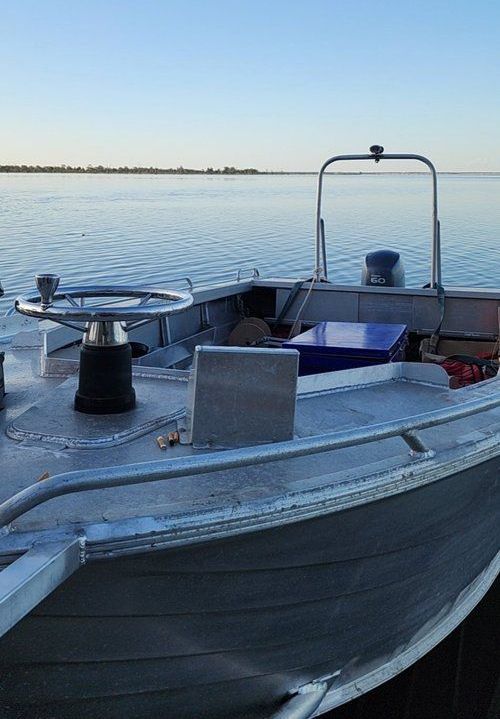
Send It Marine's Syd work boat is an 8.5 m aluminium vessel with a listed 3,000 kg deck capacity and an optional crane configuration. That type of setup can suit marine construction, mooring placements, recovery support, infrastructure work, and other jobs where the project needs both powered vessel movement and lifting capability.
By comparison, a larger non-propelled pontoon barge may make more sense when the project needs a broad working platform or greater deck capacity. Send It Marine's Darter barge has a listed 10,000 kg deck capacity, but it requires a suitable powered vessel for movement. Our guide to how pontoon barges are used in marine construction explains where that larger platform can fit into a project.
What marine construction jobs can require crane support?
Marine construction frequently involves components that are awkward to move by hand and difficult to access with land-based equipment. A crane can help position materials close to the work face and reduce repeated manual handling or small-vessel transfers.
Potential applications include jetty and pier works, bridge maintenance, mooring installation, pontoon works, marine signage, temporary structures, pumps, small plant, materials, recovery equipment, and other project components. The suitability of each lift still depends on the crane, vessel, load, and site conditions.
For projects involving several different activities, crane support may be combined with work boats, barges, commercial divers, and other marine equipment. Send It Marine's marine construction project support is designed around this type of mixed vessel and equipment requirement across South Australian waterways.
When is a marine crane useful for vessel or object recovery?
Recovery work is another common reason to consider marine lifting equipment. A submerged object, damaged boat component, mooring, debris item, or partially refloated vessel may need mechanical lifting once it has been stabilised or brought into a suitable position.
The crane may work alongside divers, recovery airbags, pumps, rigging, or work boats rather than replacing those systems. For example, buoyancy can reduce the effective underwater load of an object before a crane is used to control its final lift or transfer it onto a vessel or shore-based area.
Send It Marine's marine airbag recovery services can form part of suitable recovery operations where flotation and lifting need to be combined. The recovery method should be selected after the vessel or object, water depth, condition, access, and final destination have been assessed.
Why does working radius matter in marine crane operations?
Crane capacity is not a single fixed number. The amount a crane can safely lift generally changes as the load moves farther from the crane, which is why the required working radius is central to lift planning.
On a water-based project, the radius can be affected by how close the vessel can safely position to the load. A crane may have enough capacity at a short radius but not at the distance required to reach over a jetty, bridge component, or other obstruction. Water depth, vessel draft, fenders, structures, currents, and access restrictions can all affect how close the crane can get.
This is why project teams should provide both the estimated load weight and the required pickup and placement positions. Knowing only that an item weighs a certain amount is not enough to determine whether a crane configuration is suitable.
How does vessel stability affect a marine crane lift?
A crane operating on water introduces forces that affect the vessel beneath it. As the crane slews, raises, lowers, or extends a load, the vessel can heel or list, and the load position can change the stability of the entire system.
Safe Work Australia's vessel-mounted crane guidance identifies vessel freeboard, maximum heel or list, ballast, water depth, weather, anchorage, and the crane's rated capacity for vessel operation among the factors that should be checked before use. It also notes that crane capacity may need to be de-rated when operating from a barge, pontoon, or vessel.
For project managers, the practical lesson is straightforward: available deck space does not automatically mean a vessel is suitable for a crane or a particular lift. The crane and vessel need to be considered together, including how the load will affect stability throughout the full lifting sequence.
Do weather, current, and water depth affect marine crane work?
Yes. Conditions that might have limited impact on a land-based lift can become much more important when the lifting platform itself is floating. Wind can influence both the load and vessel, waves can create movement, and current can make it harder to maintain position beside a structure.
Water depth also affects where the vessel can operate. A work boat or barge may need enough depth to approach the load while maintaining suitable clearance beneath the hull. In shallow rivers or near shorelines, this can determine whether the crane can reach the required pickup or placement point.
Tides, changing river levels, bridge clearances, access to ramps, and the ability to secure or position the vessel may also influence the timing and configuration of the job. These factors are particularly relevant across South Australia, where projects can range from River Murray sites to coastal, marina, and regional waterways.
What information is needed before arranging marine crane hire?
A useful crane enquiry should describe the lift rather than simply asking for a crane. The more accurate the project information, the easier it is to determine whether a crane-equipped work boat, barge-based setup, or another lifting arrangement may be appropriate.
Useful information can include:
- project location and waterway
- estimated load weight
- load dimensions and shape
- pickup point and final placement point
- approximate horizontal reach required
- known water depth and access restrictions
- photographs, plans, or drawings of the site
- available shore, ramp, or wharf access
- whether the load is submerged, floating, or on land
- whether rigging, divers, barges, or additional work boats are required
- expected project dates and working duration
- known current, tide, weather, or clearance constraints
If accurate load information is unavailable, that should be identified early. The lift may need additional investigation before a suitable crane arrangement can be selected.
When is a marine crane not the best option?
Not every water-based project requires mechanical lifting. Small loads may be handled safely using other suitable equipment, while some submerged assets may be better recovered using buoyancy systems before any crane is introduced.
Land-based lifting may also be more efficient where a crane can set up safely close to the work area with sufficient reach. Conversely, a project that requires very heavy lifting or a large working platform may need a dedicated crane barge or specialist heavy-lift configuration beyond a smaller vessel-mounted crane.
The best approach is therefore to define the job first. Consider what needs to be moved, where it is now, where it needs to go, how much it weighs, how close a vessel can get, and what support is needed before and after the lift. Our earlier guide comparing a work boat and barge for marine projects can help with the wider vessel-selection decision.
Marine crane hire for South Australian water-based projects
Send It Marine provides marine cranes, work boats, barges, recovery equipment, and marine project support across South Australia. The current marine crane offering is positioned for small to medium-scale construction, infrastructure, recovery, and specialised lifting work in coastal, river, inland, regional, and remote locations.
Because every lift is different, the most useful starting point is a clear description of the project. Provide the load details, site location, photographs, access conditions, required reach, and where the load needs to be placed so the appropriate vessel and lifting setup can be considered.
If your project involves lifting equipment, marine infrastructure, recovery work, moorings, materials, or other loads on the water, contact the Send It Marine team to discuss the project requirements and available marine crane and vessel options.