What Is a Pontoon Barge Used For in Marine Construction?
A pontoon barge is one of the most practical ways to create working space on the water when a marine construction project cannot be completed efficiently from shore. Its broad deck can carry materials, tools, plant, recovered assets, and project personnel while providing a floating platform close to bridges, jetties, piles, retaining structures, and other waterside infrastructure.
Unlike a conventional powered work boat, a pontoon barge is usually selected because of the working area and carrying capacity it can provide rather than its speed or manoeuvrability. Some barges have their own propulsion, while others are pushed or towed by another vessel. The right arrangement depends on the site, the load, the waterway, and the work being performed.
For South Australian projects, Send It Marine provides Darter pontoon barge hire alongside powered work boats and other specialised marine equipment. This guide explains what pontoon barges are commonly used for in marine construction, what they can support, and what project teams should consider before selecting one.
What is a pontoon barge?
A pontoon barge is a flat-decked floating platform designed to carry loads or support work over water. The hull configuration creates a broad deck that can be used for equipment, materials, machinery, temporary work areas, and marine construction activities.
The term covers a wide range of vessels. Some are modular barges assembled from separate pontoons, some are steel construction barges, and others are purpose-built aluminium platforms. Barges can also be powered or unpowered, with unpowered barges relying on another suitable vessel to push, tow, or reposition them.
AMSA classifies commercially used construction barges as domestic commercial vessels. Its current guidance notes that barges may be used as work platforms or to transport equipment, supplies, and waste. It also identifies stability, access, personal safety, and relocation of unpowered barges as important operational considerations. See AMSA construction barge safety guidance.
Why are pontoon barges useful in marine construction?
Marine construction often takes place where ordinary road access ends at the waterline. A contractor may need to position tools beside a bridge pier, transport materials to a jetty, carry equipment to a riverbank site, support divers, or create temporary working space around an asset that cannot be reached from land.
A pontoon barge can move that working area onto the water. Instead of repeatedly transferring small loads by boat, the project may be able to carry a larger quantity of equipment and materials together and keep them close to the work face.
This can be useful for bridge works, jetty construction, piling, repairs, inspections, maintenance, recovery, demolition, and other water-based tasks. Across the Australian marine construction sector, barges are also used for crane and excavator operations, drilling, diving, dredging, material transport, and temporary overwater access.
What can a pontoon barge carry?
The answer depends on the individual barge and its approved operating limits. Project loads can include construction materials, tools, pumps, generators, scaffolding, temporary structures, marine equipment, recovered objects, and selected mobile plant where the vessel is designed and approved for that use.
Deck capacity should never be treated as a simple question of whether an item physically fits. The weight, concentration of the load, distribution across the deck, vessel stability, freeboard, securing arrangements, environmental conditions, and any lifting operations all need to be considered.
AMSA specifically identifies heavy deck loads, powered mobile plant, and lifting heavy weights among the risks that may be present on construction barges. Its guidance also highlights maximum deck loading, load distribution, structural capacity, securing large machinery, and stability as issues that need to be managed.
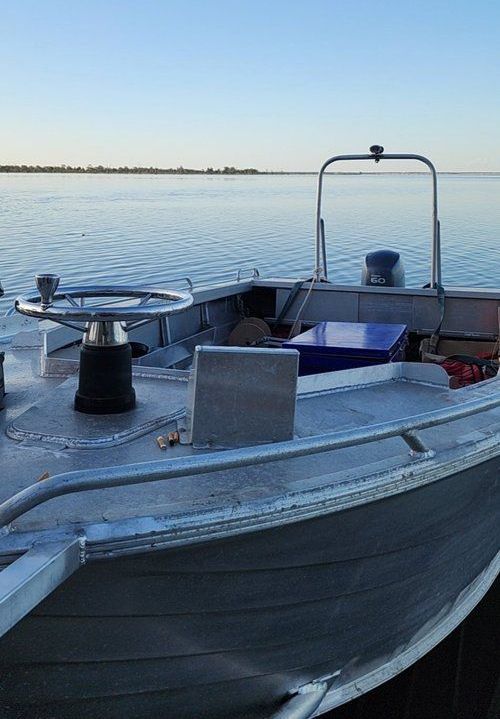
Send It Marine's Darter transport barge is a 10.2 m aluminium pontoon barge with approximately 4.1 m by 10.2 m of usable deck space and a listed 10,000 kg total deck capacity. It is designed around large loads, deck space, and use as a working platform rather than standalone propulsion.
How are pontoon barges used for bridge and jetty works?
Bridges and jetties frequently include components that are difficult to reach from shore. Piles, piers, abutments, fenders, moorings, underside elements, and foundations may sit over or within the water, while materials and equipment need to be positioned close enough for construction crews to work effectively.
A pontoon barge can provide temporary access beside these structures. Depending on the project, the deck may be used to stage materials, carry tools, support project personnel, hold pumps or other equipment, or provide space for works that need to be completed from the water side of the asset.
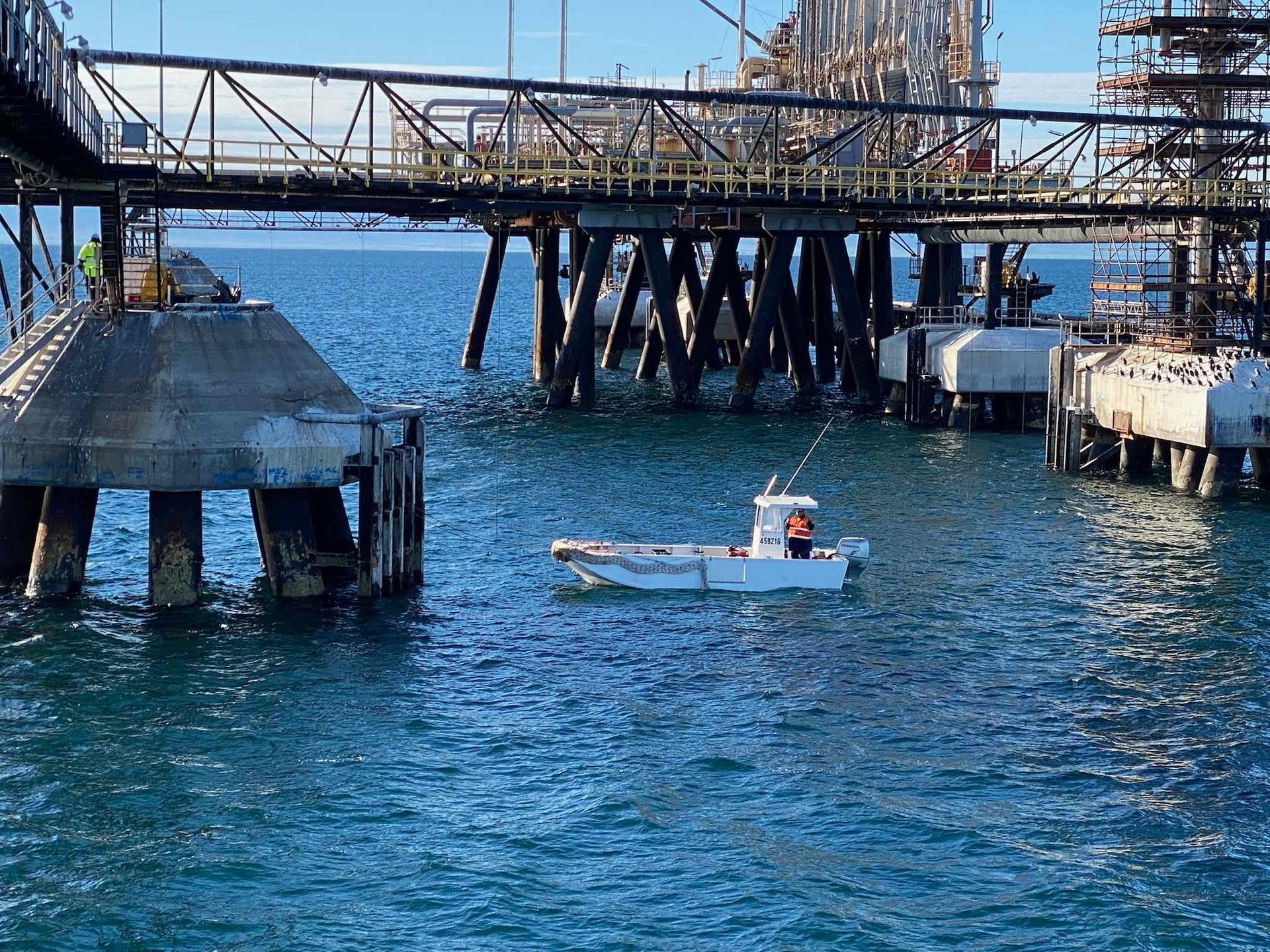
For bridge projects, barges may support piling, repair, demolition, inspection, scour-related works, or construction activities around piers and abutments. For jetties and wharves, a barge may provide access along different sections of the structure without requiring a separate shore-based setup at every work point.
Where underwater inspection forms part of the job, the barge can also work alongside commercial diving support and smaller powered vessels. The exact combination should be selected around the task rather than assuming the barge needs to perform every function itself.
Can pontoon barges support cranes, excavators, and other plant?
Some construction barges are specifically designed and configured to carry cranes, excavators, drill rigs, piling equipment, or other mobile plant. This can turn the barge into a floating construction platform for work that would otherwise require difficult shore access or temporary structures.
However, the presence of a large deck does not automatically mean a barge is suitable for any machine. Plant weight, point loading, operating radius, dynamic loads, barge stability, freeboard, securing arrangements, and the effect of moving or slewing equipment all need to be assessed.
AMSA notes that construction barges can undertake activities involving heavy deck loads, lifting, and powered mobile plant, and that risk assessments need to reflect the operation actually being performed. For crane work, the vessel and lifting arrangement need to be suitable for the intended load and operating conditions.
Send It Marine also has marine crane capability for suitable projects. Where a barge and lifting equipment are being considered together, the project scope should be reviewed around the load, reach, deck arrangement, water conditions, and where the lifted item needs to be placed.
How are barges used to transport materials and equipment?
Transport is one of the simplest and most useful barge applications. When a marine construction site has poor road access, sits on the opposite bank of a waterway, or requires materials to be delivered directly beside the work area, a barge can provide a water-based logistics platform.
Loads might include construction materials, temporary works, tools, pumps, small plant, recovered objects, or project equipment. A barge can also reduce the need for repeated small-vessel trips where the load is better handled as a single planned movement.
Project teams still need to plan how the load gets onto and off the barge. Shore access, ramps, cranes, forklifts, loading points, water depth, tides, bank conditions, and the availability of suitable lifting equipment can all influence whether the transport arrangement is practical.
This is particularly relevant across regional South Australia, where a marine project may be well away from permanent wharf infrastructure. Send It Marine's wider commercial vessel hire fleet allows the transport platform and supporting powered vessel to be considered together.
How are unpowered pontoon barges moved?
An unpowered barge needs another suitable vessel or approved arrangement to relocate it. This may involve pushing or towing between the launch point and work area, repositioning around a project site, or moving the barge between separate work fronts.
AMSA notes that construction barges are regularly relocated by being pushed or towed and that these movements introduce their own risks. Wind, currents, tides, barge weight, cargo, visibility, towing arrangements, the suitability of the powered vessel, communications, passage planning, and emergency anchoring all need consideration. See AMSA guidance on towing and pushing smaller construction barges.
Send It Marine's Darter is a non-propelled barge and requires a push vessel. The company's Seahorse work vessel is specifically listed for applications that include barge pushing, as well as crew transfers, infrastructure inspections, and minor marine construction.
This illustrates why a marine project may need more than one vessel. The barge can provide deck space and load capacity, while the powered work boat provides movement, access, transfers, or support around the work platform.
Can a pontoon barge support diving and underwater work?
Yes, where the barge configuration and project plan are suitable. A barge can provide deck space for diving equipment, pumps, tools, recovery equipment, project personnel, and other gear required close to an underwater work area.
For inspection or recovery projects, a broad platform may also help organise equipment and recovered materials while smaller work boats handle movement around the site. In other situations, a compact work boat may be sufficient and a barge would add unnecessary mobilisation and complexity.
The decision should come back to the job. If the main requirement is moving divers and inspection equipment between several locations, a powered work boat may make more sense. If the project also needs substantial deck space, heavier equipment, materials, or a persistent work platform beside the asset, a barge may add practical value.
Our earlier guide comparing a work boat vs barge for marine projects explains this decision in more detail.
What role do pontoon barges play in marine construction logistics?
Marine construction logistics involves more than transporting materials. The project team needs to coordinate the movement of people, tools, equipment, waste, recovered items, and temporary works between land and the marine work area.
A barge can act as the central platform in that system. It may remain near the structure while smaller work boats move personnel and smaller loads to and from shore. This can reduce unnecessary movement of the main work platform and keep frequently used equipment close to the task.
For longer marine construction projects, the barge may also provide a staging area for materials before installation. This can be useful where the shoreline has limited working room, environmental restrictions reduce land-based access, or the structure is easier to reach from the water.
Send It Marine's marine construction project support combines vessels, marine equipment, and water-based access according to the scope of the job.
When is a pontoon barge not the best option?
A pontoon barge is useful when deck space and carrying capacity matter, but it is not automatically the best vessel for every water-based task. A small inspection, crew transfer, or diving job may be completed more efficiently with a powered work boat that is easier to manoeuvre and quicker to mobilise.
Site access can also limit barge use. Narrow waterways, low bridges, shallow launching points, restricted turning areas, strong currents, difficult banks, or limited crane access can make a large platform impractical. An unpowered barge also requires a suitable method of movement and positioning.
The best starting point is to define what the vessel actually needs to do. Project teams should consider the required deck area, total and concentrated loads, number of people, equipment, lifting requirements, duration of the work, movement between work fronts, launch access, water depth, and the conditions expected at the site.
What should you provide when enquiring about pontoon barge hire?
A clear project brief makes it easier to determine whether a pontoon barge is suitable and what supporting vessels or equipment may be required.
Useful information can include:
- project location and waterway
- type of marine or civil works being undertaken
- expected project dates and duration
- estimated equipment and material weights
- largest individual or concentrated load
- required deck working area
- number of personnel expected on the vessel
- whether cranes, pumps, plant, or other equipment will be used
- available launch, loading, and shore access points
- known water depth, current, tide, and bridge-clearance constraints
- whether the barge needs to move frequently during the work
Providing drawings, photographs, load information, and site access details can also help the marine contractor understand the likely configuration before mobilisation.
Pontoon barge hire for South Australian marine projects
South Australian marine projects can range from River Murray and Riverland works to Adelaide, coastal locations, marinas, bridges, and remote regional waterways. The required platform can therefore change significantly from one project to another.
Send It Marine's Darter is a 10.2 m non-propelled aluminium pontoon barge designed around large deck space and transport of substantial project loads. It can be considered alongside Send It Marine's powered work boats, diving capability, recovery equipment, and marine lifting support where a wider vessel package is required.
If you are planning bridge, jetty, marine construction, recovery, or other water-based works, contact the Send It Marine team with the project location, expected loads, access conditions, and work scope. Those details provide a practical starting point for deciding whether a pontoon barge, work boat, or combined vessel setup is the better fit.